Most homeowners in Oak Harbor, Coupeville, and across Whidbey Islandrarely think about their septic system, and that’s exactly the problem. When a septic issue finally gets noticed, it’s usually because something has already gone wrong: a slow drain, a foul smell, or water pooling in the yard. By that point, the fix can be expensive.
The reality is that septic systems almost always show quite warning signs long before visible problems appear. Professional inspections are designed to catch those hidden issues early, when they’re still small, affordable, and easy to fix.
With many homes in communities like Oak Harbor, Coupeville, and Anacortes relying on onsite wastewater systems rather than municipal sewer connections, routine septic inspections aren’t just maintenance; they’re one of the smartest ways homeowners protect their property, avoid unexpected septic repairs, and extend the life of their system.
Hidden Septic Problems Professionals Detect First
Slow drains, yard odors, and soggy patches near the drain field are not early warning signs. By the time those symptoms appear, the system has already been struggling for a while. Certified septic pros are trained to find what homeowners cannot see, and that gap in visibility is exactly where inspections earn their value.
What trained technicians commonly find before homeowners notice anything:
- Early saturation in the drain field
- Hairline cracks are forming in the tank walls
- Distribution pipes are beginning to block
- Sludge levels are approaching the point of overflow
- Pump or alarm components showing wear
None of these warning signs seems dramatic on paper. In practice, any one of them left unaddressed can result in a full system failure, and the U.S. Environmental Protection Agency estimates the replacement cost of a failed septic system at $10,000 to $30,000, depending on the property.
Routine homeowner septic checks with a qualified technician are what keep those numbers off the table.
Why Early Detection Matters
Septic problems do not grow linearly. A small issue ignored for one season becomes a significantly larger one by the next, and a significantly larger one ignored long enough becomes a full replacement conversation. Catching something early is not just cheaper; it is a completely different category of expense.
| Scenario | What It Typically Means |
| Problem identified during a routine visit | Small repair, minimal disruption, manageable cost |
| Problem identified after visible failure | Full repair or replacement, significant expense, and downtime |
Septic failure prevention is genuinely one of those areas where doing less later depends entirely on doing more now.
Common Septic Myths That End Up Costing Homeowners Money
Septic misinformation is genuinely widespread, and most of it leads homeowners to skip maintenance they actually need. Some of it comes from previous owners, some from neighbors, and much of it simply from the belief that a system that seems fine probably is. That assumption is where most expensive repairs begin.
| Myth | Reality |
| Working drains mean a healthy system | Drain field failure develops quietly long before indoor drainage is ever affected |
| Additives eliminate the need for pumping | Sludge accumulates regardless of any treatment product on the market |
| New systems need no early inspection | Installation quality, soil conditions, and usage all determine how fast problems develop |
| A bad smell is the first warning sign | Many serious failures produce no surface odor until repair options are already limited |
| Flushable wipes are safe to flush | They do not dissolve and can accumulate in the tank, accelerating blockages over time |
For homeowners across Oak Harbor, Coupeville, Anacortes, and Whidbey Island, WA, the most reliable guidance will always come from certified septic pros who know your specific property, system type, and local soil conditions rather than general assumptions passed down over the years.
The Professional Septic Inspection Process Step-by-Step
Many homeowners picture a septic inspection as a quick look inside the tank. A proper septic inspection process covers considerably more ground than that.
Step 1: System Location and Access
The technician identifies the tank location, access lids, and drain field boundaries. On older properties, especially, this step alone requires experience and careful assessment.
Step 2: Tank Evaluation
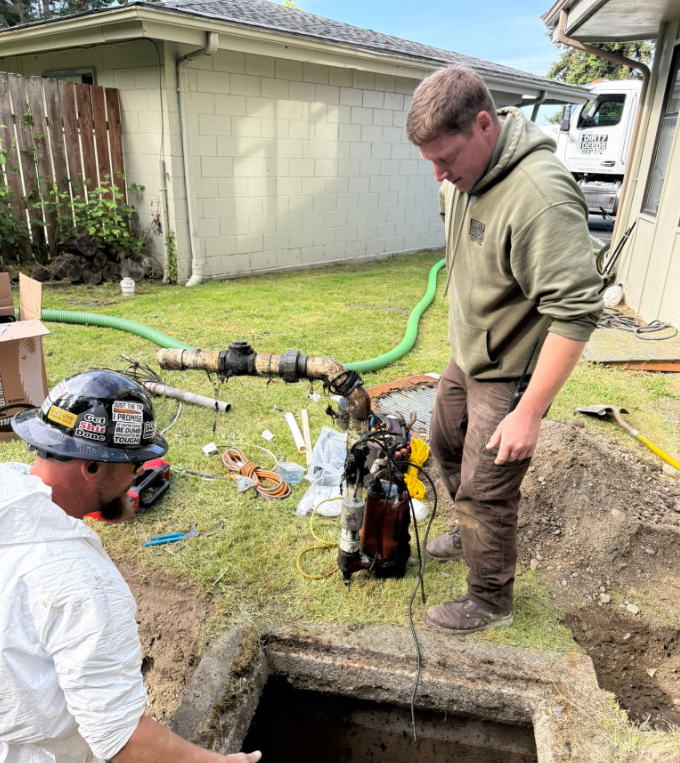
The tank is opened and assessed for sludge and scum accumulation, structural condition, signs of cracking or seepage, and the state of the inlet and outlet baffles.
Step 3: Drain Field Assessment
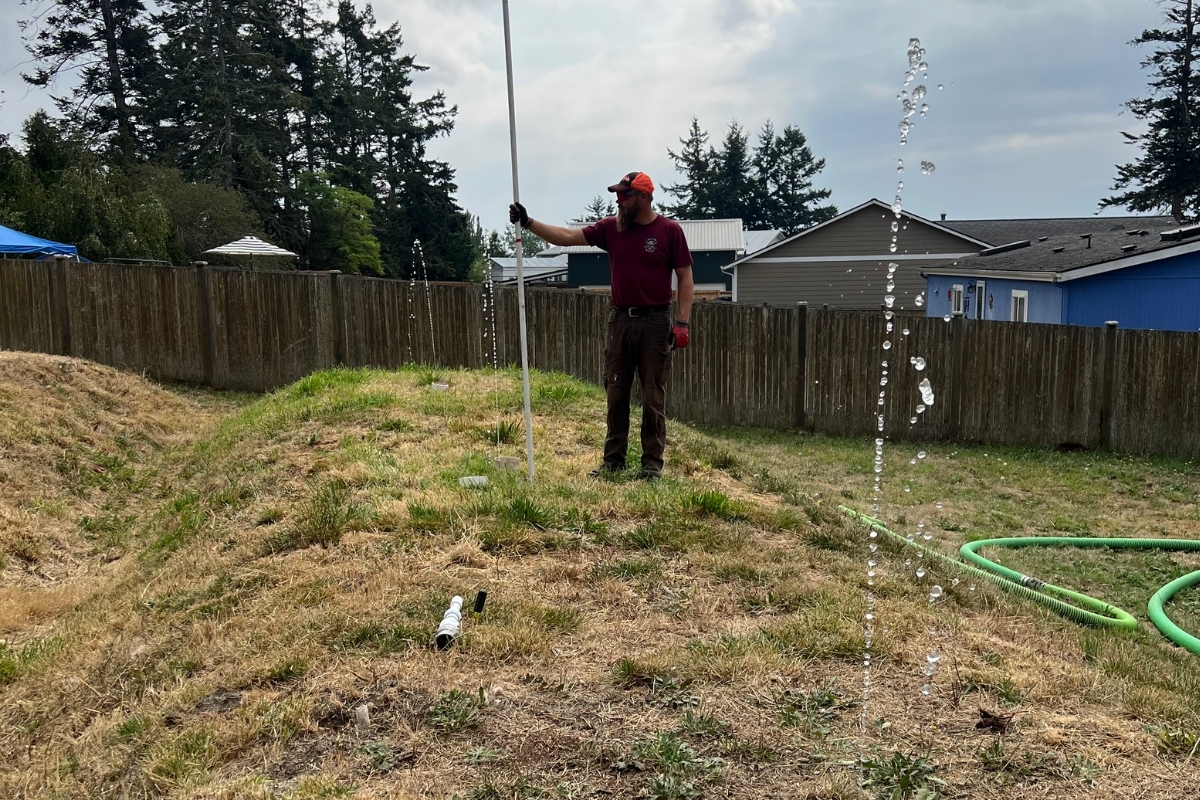
Here, we check how well the soil absorbs treated wastewater, whether surface pooling is occurring, what the vegetation patterns are telling us, and whether early stress indicators are showing up.
Step 4: Mechanical and Electrical Checks
Pumps, float switches, alarms, and any electrical components are tested and verified.
Step 5: Report and Recommendations
The inspection closes with written documentation covering what was found and what, if anything, needs attention in the near term.
Short-Term Costs vs. Long-Term Savings
Most people skip inspections for one simple reason: they see it as an added cost. What that framing misses is everything an inspection prevents.
| Type of Service | Typical Cost Range |
| Scheduled professional inspection | Low to moderate |
| Routine pumping service | Moderate |
| Drain field repair work | Several thousand dollars |
| Full system replacement | Varies |
The U.S. Geological Survey has documented cases where neglected septic systems contaminated surrounding groundwater, triggering remediation costs that extended well beyond the original property.
Septic system savings are real, but they only materialize for homeowners who stay ahead of the maintenance curve rather than reacting to failures after the fact.
Long-term septic care protects the home, the surrounding land, and the water table beneath it.
When Should You Schedule an Inspection?
The worst time to schedule an inspection is after an alarm goes off or a drain backs up. These visits are most useful when nothing is visibly wrong, because that is when they actually prevent problems.
Situations that call for a professional inspection:
- Standard practice every three to five years
- Before completing the purchase of a home with an existing system
- When preparing a property for sale
- After prolonged heavy rainfall or localized flooding
- Any time the septic alarm activates
Across Whidbey Island, WA, and the broader region, properties with onsite wastewater systems are common enough that septic repair avoidance should be a routine part of homeowners’ property management, not something that arises only in a crisis.
Maintenance Habits That Amplify Septic Savings
What happens between inspections matters just as much as the inspections themselves. A few straightforward habits can meaningfully reduce strain on the system and lower septic maintenance costs over time.
Day-to-day practices that protect the system:
- Run laundry loads spread across the week rather than back-to-back
- Keep fats, oils, and grease away from kitchen drains entirely
- Pull back on water usage during extended rainfall periods
- Protect the drain field area from heavy landscaping or vehicle traffic
- Follow your technician’s pumping schedule based on actual household usage
| Maintenance Task | How Often |
| Professional septic inspection | Every 3 to 5 years |
| Tank pumping | Per technician recommendation |
| Alarm and float switch check | Once a year |
| Drain field visual check | Every season |
Pairing these habits with consistent professional visits is what genuinely extends a system’s working life and keeps repair bills from appearing without warning.
Protecting Your Property with Smart Septic Planning
A septic system earns very little attention when it is working well. That is fine. It just means the work of keeping it healthy has to happen on a schedule, not in response to symptoms.
For homeowners across Oak Harbor, Coupeville, Anacortes, and throughout Whidbey Island, WA, Dirty Deeds Septic offers inspections, pumping, drain field repairs, and full system installations. Our technicians know these properties and understand local conditions, and they give homeowners straightforward answers rather than unnecessary upsells.
If your last inspection was more than a few years ago, or if you have moved into a home and are not entirely sure when the system was last evaluated, feel free to contact ourcertified septic pros at (833) 784-6592 to schedule an appointment with our team today.