Introduction
Most homeowners don’t think about their septic system until it’s too late. What’s happening underground is a constant biological and mechanical process: solids settling, effluent filtering through the drain field, and pumps cycling thousands of gallons of wastewater every week. When that process starts to break down, the signs are easy to dismiss. A slow drain here, an odd smell there. But here’s what many homeowners don’t realize: by the time sewage backs up into your home or surfaces in your yard, the damage is already weeks, sometimes months, in the making. One ignored warning sign can escalate into a failed drain field, contaminated groundwater, and a full system replacement.
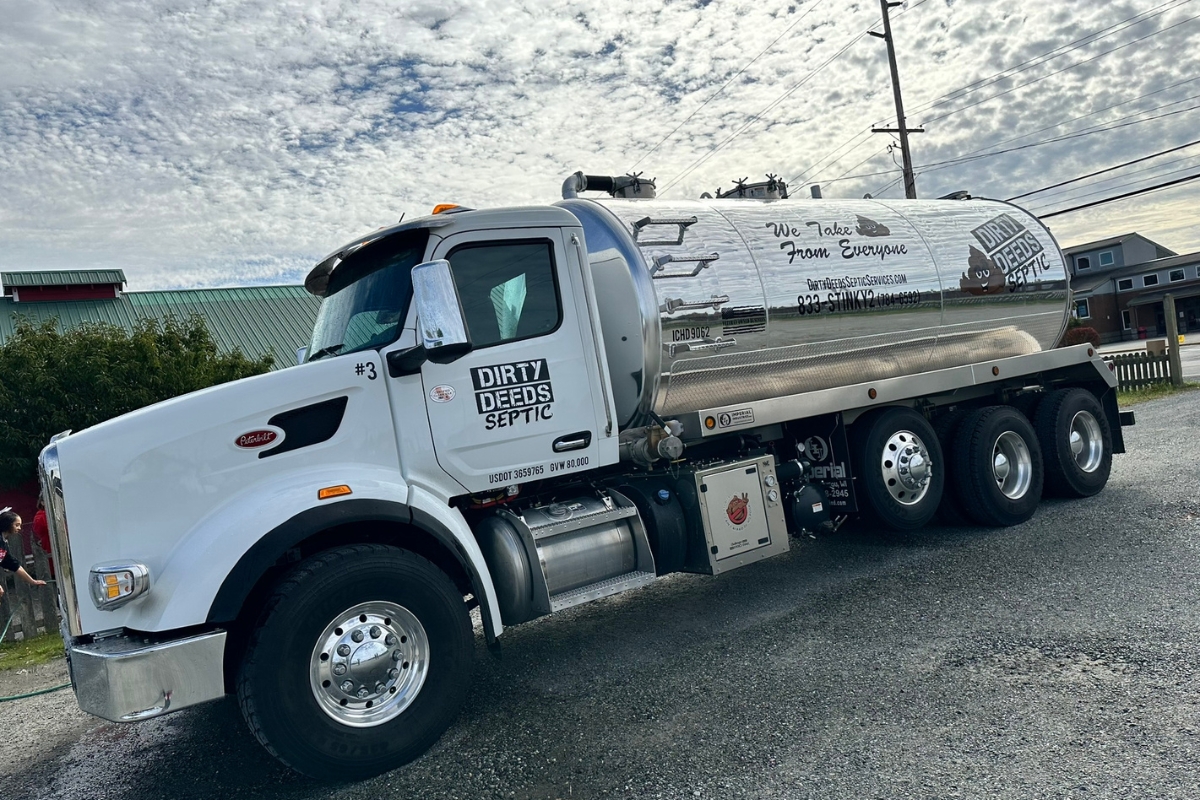
At Dirty Deeds Septic, we see this every week, and we’ve made it our mission to catch these problems before they reach that point.
This blog covers how to recognize a septic emergency before it becomes catastrophic, from understanding what your system’s alarm is actually telling you, to the specific warning signs that demand immediate emergency septic service.
What Is Considered a Septic Emergency?
Not every septic issue is an emergency, but knowing the difference could save your property. A septic emergency is any condition where your system poses an immediate threat to your home, your health, or the surrounding environment. Slow drains might be a clog. But when multiple fixtures fail simultaneously, or when your alarm sounds, you’re dealing with something deeper.
Here’s a quick reference:
Situation | Action Needed |
| Sewage backing up into home | Emergency: call immediately |
| Septic alarm sounding | Emergency: reduce water use, call now |
| Standing water over drain field | Emergency: do not use yard |
| Foul odors indoors or near tank | Urgent: same-day inspection |
| Multiple slow drains across fixtures | Urgent: septic inspection needed |
| Gurgling in toilets or pipes | Prompt: early warning, act fast |
A septic system doesn’t fail overnight; it gives you warnings. The only question is whether you act on them.
Top Warning Signs You Need Emergency Septic Service
Most septic tank problems send signals well before they become disasters. Knowing what those signals actually mean, mechanically and biologically, is the difference between a service call and a full replacement.
1. Your Septic Alarm Is Going Off
Modern septic systems use a float switch inside the pump chamber to monitor water levels. There are typically two floats: one that activates the pump, and a second, higher one that triggers the alarm when water levels exceed safe thresholds. When that alarm sounds, it means the pump has either failed, can’t keep up with incoming water volume, or there’s a blockage preventing effluent from reaching the drain field. You have at most a day or two of water left before overflow becomes imminent. Reduce water use immediately and call for emergency septic pumping.
2. Sewage Backing Up Into the Home
This is a last-stage symptom, not an early warning. When raw sewage enters your home through floor drains, toilets, or sinks, the tank is either at capacity or a blockage is preventing any outflow. Exposure to raw sewage carries genuine health risks, including bacterial pathogens. Stop all water use, avoid the affected areas, and contact us immediately.
3. Soggy Ground or Unusually Green Grass Over the Drain Field
Effluent surfacing in your yard isn’t just unpleasant; it means the soil beneath your drain field has lost its ability to absorb and filter wastewater. Soil that’s been saturated long enough often can’t recover, and full excavation becomes unavoidable. With proper septic maintenance, a drain field can reliably serve a home for 20–30 years. Without it, that timeline shortens fast. For homeowners near the water in Whidbey Island, WA, and Anacortes, WA, surfacing effluent also carries serious environmental implications that county health authorities don’t take lightly.
4. Several Plumbing Fixtures Draining Slowly at Once
A single slow drain is usually isolated. But when sinks, showers, and toilets throughout the home all slow down simultaneously, the problem is system-wide, typically an overfull tank or a failing drain field. This pattern calls for an immediate septic inspection and not a wait-and-see approach.
5. Unpleasant Odors Around the Septic Tank or Drain Field
A functioning septic system shouldn’t produce detectable odors at ground level. So when that rotten egg smell (hydrogen sulfide gas) starts drifting near the tank, rising through floor drains, or lingering over the drain field, something in the system has broken down. Gases escape through gaps they were never supposed to reach, which typically points to a failed inlet or outlet baffle, an overfull tank, or a drain field that’s no longer processing effluent correctly. None of these fix themselves.
What You Think vs. What’s Actually Happening
What It Looks Like | What’s Really Going On |
| “The drain is just a little slow” | Tank nearing capacity, effluent has nowhere to go |
| “It’s probably just a clog” | Possible system-wide blockage or biomat buildup in drain field |
| “The yard is just wet from rain” | Surfacing effluent, drain field may be failing |
| “The alarm will reset itself” | Pump failure or overflow imminent within 24–48 hours |
Why Ignoring Septic Warning Signs Can Lead to Major Damage
The EPA recommends septic pumping every three to five years for the average household. Most emergency calls we respond to involve systems that haven’t been pumped in for far longer. When solids aren’t removed on schedule, they migrate into the drain field, clogging the perforated pipes and the surrounding soil. Once the biomat layer in the drain field becomes impermeable, no amount of pumping will restore it. Full drain field replacement is the only option, and it is not a minor undertaking.
In addition to affecting the drain field, a sewage backup inside the home can damage flooring, subflooring, and drywall. In Washington State, a failing septic system can also trigger health department violations, something property owners in Island County and Skagit County need to take seriously, given the area’s environmental sensitivity and proximity to water bodies.
Common Causes of Emergency Septic Problems
The most preventable emergencies have the most common causes. Understanding them helps homeowners in Oak Harbor, Coupeville, WA, and across Whidbey Island, WA, stay ahead of problems.
1. Overdue septic pumping
When solids aren’t cleared on schedule, they keep accumulating until the system runs out of room. This tops the list of reasons we get called out, and it’s not close.
2. “Flushable” wipes
That label is misleading. These wipes don’t dissolve in a septic environment the way toilet paper does. They clump with grease and debris quietly until a line is fully blocked.
3. High water volume
A house full of holiday guests or three back-to-back laundry loads can push more water through the system in a few hours than the pump can move out. That’s what trips the alarm float, not a malfunction, just an overwhelmed system.
4. Tree root intrusion
Roots follow moisture, and your septic lines are full of it. They crack and infiltrate pipes in ways that aren’t visible from the surface, eventually requiring septic system repair to address properly.
5. Aging infrastructure
Steel tanks corrode from the inside out and are realistically functional for 15–20 years. Without routine septic inspection, that deterioration stays hidden until something fails completely.
How Emergency Septic Services Help Prevent Bigger Problems
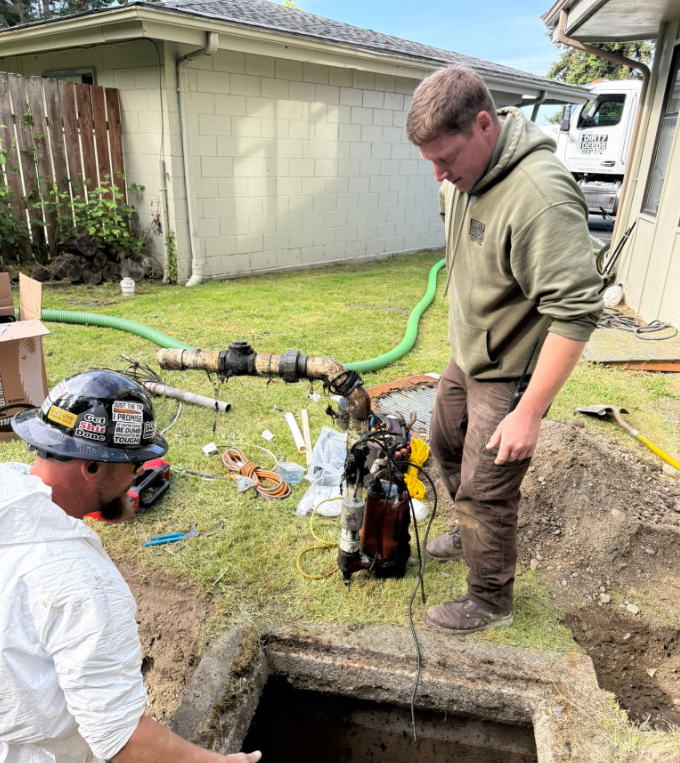
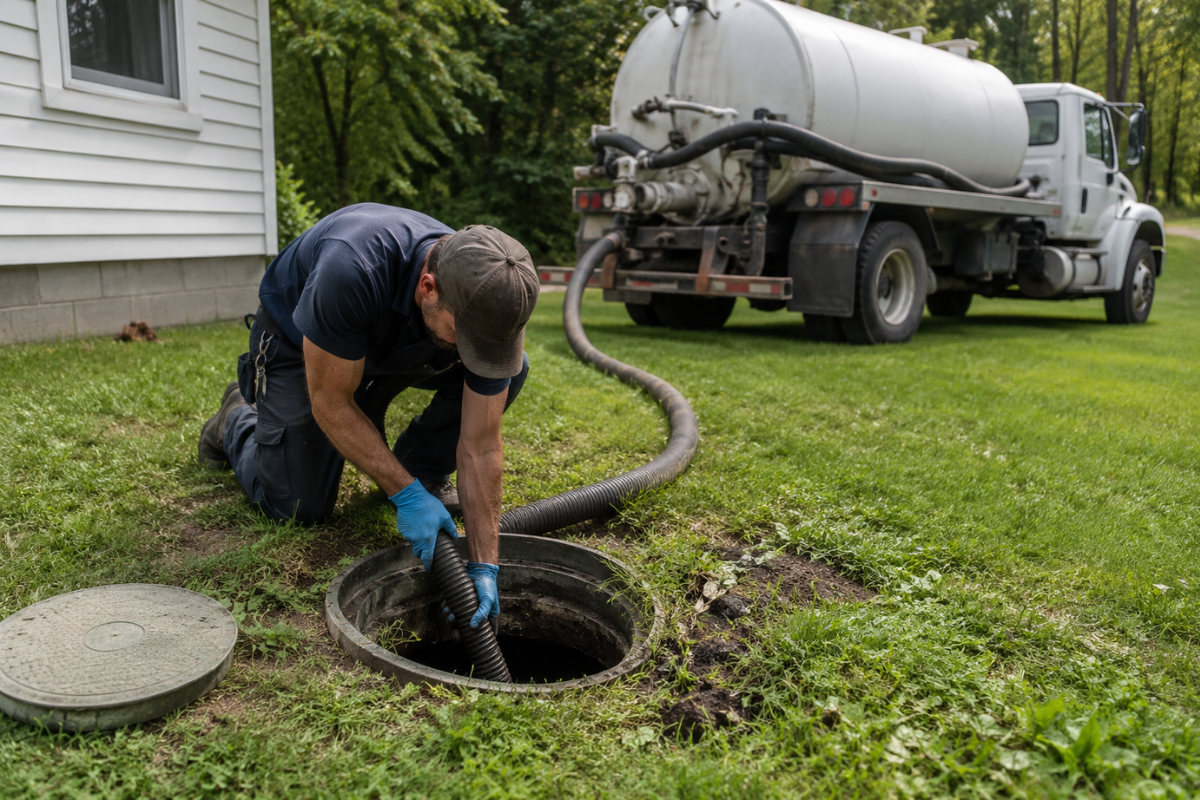
When our team at Dirty Deeds Septic shows up for an emergency, we are not just there for what we can see. The presenting issue is rarely the only issue. We evaluate the entire system, pump function, baffle condition, drain field saturation, and alarm integrity. Emergency septic pumping relieves immediate pressure, but a thorough evaluation is what prevents the next emergency. That’s how we approach every call.
Why Professional Emergency Septic Services Matter
There’s a practical reason Washington State requires licensed professionals for septic work: these systems handle hazardous waste, and mistakes have real consequences. At Dirty Deeds Septic, our septic repair services go beyond showing up with the right equipment. We document every emergency response, maintain full compliance with county regulations, and provide certified septic inspections recognized for home sales across Island and Skagit Counties. Attempting to intervene in a backed-up or pressurized system without proper training risks direct pathogen exposure, physical injury, and, in some cases, voiding your system’s existing warranty. It’s not worth it.
Residential septic services backed by licensed professionals also carry legal weight, critical when selling property or responding to county health compliance requirements.
When Warning Signs Turn Into Real Consequences, Act Now
Septic emergencies are predictable. The systems that fail catastrophically almost always had warning signs that were delayed or dismissed. A failed drain field means excavation, landscaping disruption, and significant time without a functioning system. A sewage backup means health risks, property damage, and potential regulatory consequences.
Dirty Deeds Septic provides 24/7 emergency septic service across Oak Harbor, Coupeville, WA, Anacortes, WA, and throughout Whidbey Island, WA, Camano Island, Fidalgo Island, and beyond. We do everything from emergency septic pumping and septic tank repair to complete septic system repair and ongoing septic maintenance, with the urgency that these situations require and the transparency our customers deserve.
When the alarm sounds or the warning signs appear, don’t wait. Call Dirty Deeds Septic at (833) 784-6592; we’re ready around the clock.